
Bullseye
Contradictions, spoon theory, performance anxiety, artist labor, neurodivergence, and research-based art. (Corrected version: RFK *Jr.* not RFK!)

TL;DR: Buckle up, it’s a long post.
It’s the weekend again and I’ve been in a Walt Whitman frame of mind:
Do I contradict myself?
Very well then I contradict myself,
(I am large, I contain multitudes.)
Questions Round One, Spoons
It’s not about contradicting myself, though often I do. People think I can’t tolerate crowds, but it's only certain crowds, the ones where I feel obligated to reciprocate socially. And honestly, I’m not sure if I can put a number on what constitutes a crowd. Three? Twelve? One hundred? Will the acoustics sound shrill? Am I expected to mingle nonstop like I’m on a conveyor belt? Must I speak to anyone?1 What if I’m excited about a project no one cares about and I talk too much? Or what if I anticipate as much and simply nod in agreement to whatever is being said? What is my exit strategy and how many spoons have I used to get here?
It’s still unclear.
The contradiction? Put me in a massive crowd with strangers and zero expectation of interaction, and often I’m just fine, assuming there’s no traffic and the parking is easy. (Think State Fairs, outdoor festivals, the defunct Sky Village Swap Meet in Yucca Valley).
Spoon theory is a metaphor that Christine Miserandino came up with to explain how people with chronic illness, fatigue, or a disability need to be acutely aware of their energy units.
I didn’t know what spoon theory was until after my burnout, and even then I struggled with the concept until I remembered playing The Sims, a virtual game that was virtually all about creating a world and managing the daily needs of the characters within, ad infinitum.
I had trouble rationalizing why I should have only so many spoons in the first place. It runs counter to the abundance principle of infinite supply many of us have been conditioned to believe. I mean, shouldn’t I always have enough spoons in life? Can’t I accomplish everything if I just try harder? Good grief.
It was also difficult to fathom what activities required spoons or how many to allot. Typically, I think of getting out of bed as requiring zero spoons. Due to a chronic injury however, it sometimes requires around six. Today it required three. Correspondence, no matter what the medium, always requires a significant number of spoons, as did flossing before the Water Pik era. Making art, on the other hand, is spoon generative. Applying for grants is sorta break-even. Technical glitches and phone calls to straighten out shit that never should have happened in the first place, are the black holes of spoon depletion. Now that I have a handle on spoons (pun intended) I am better at calculating my energy needs.
The Bar Mitzvah, Performative Work, Accommodations Round One
I still feel regret for not attending my next-door neighbor’s bar mitzvah at the age of thirteen. I walked out of our house, saw the crowd gathered on their lawn across the street, froze, turned around, went back inside, and cried. It’s a distinct visual image clear as a photograph, etched in my mind. We had known each other since we were four and spent almost every weekend playing together, rain or shine.
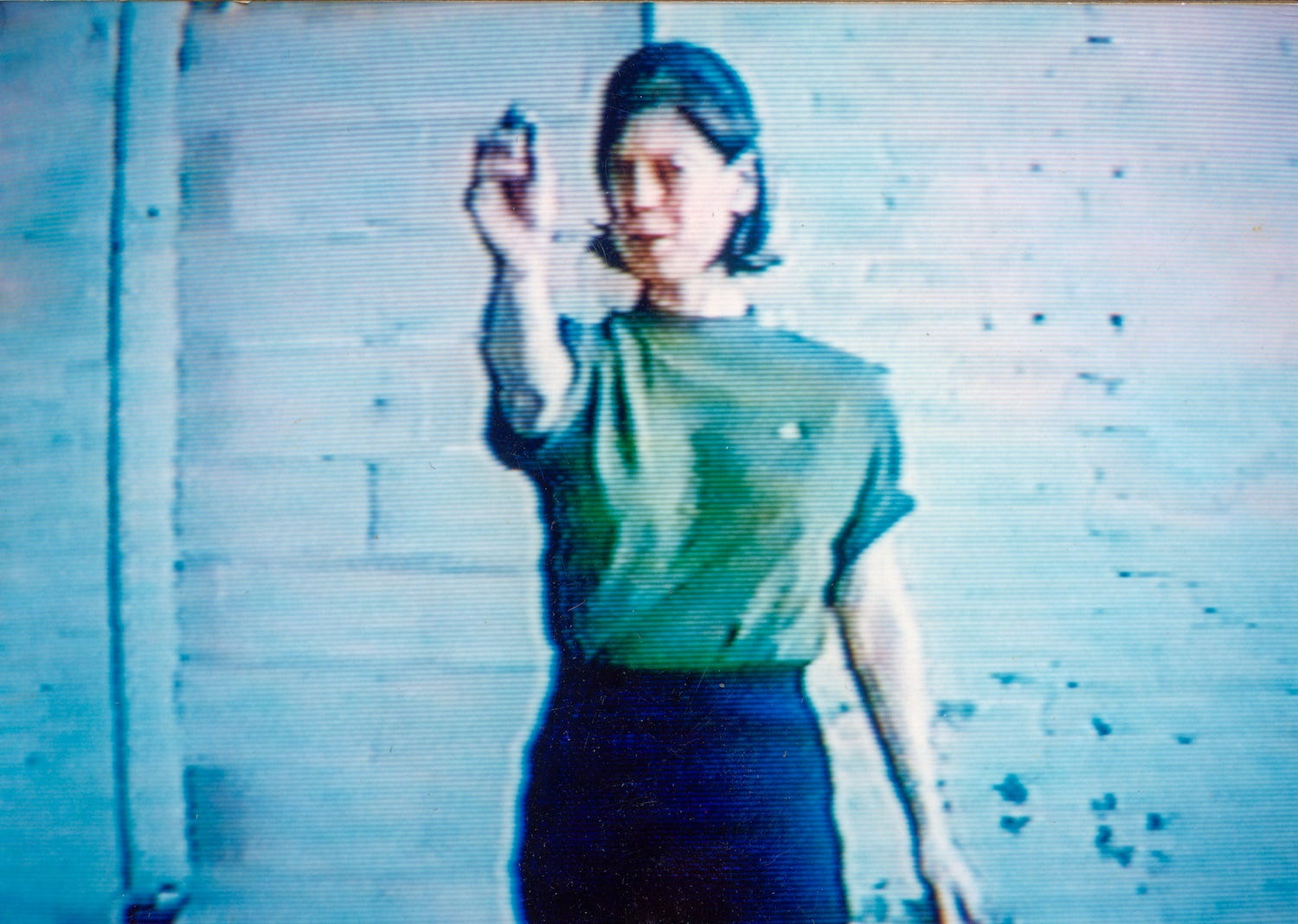
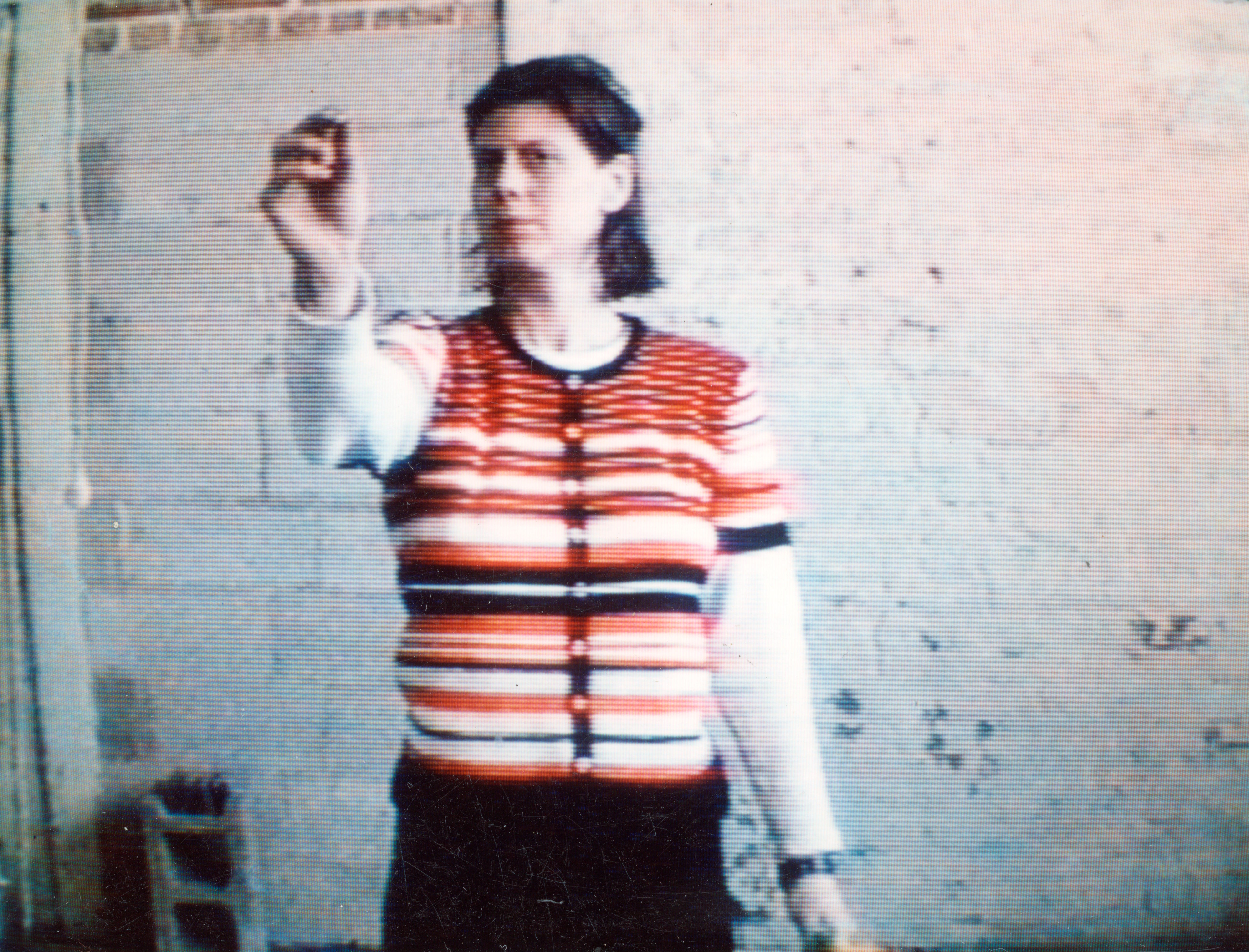
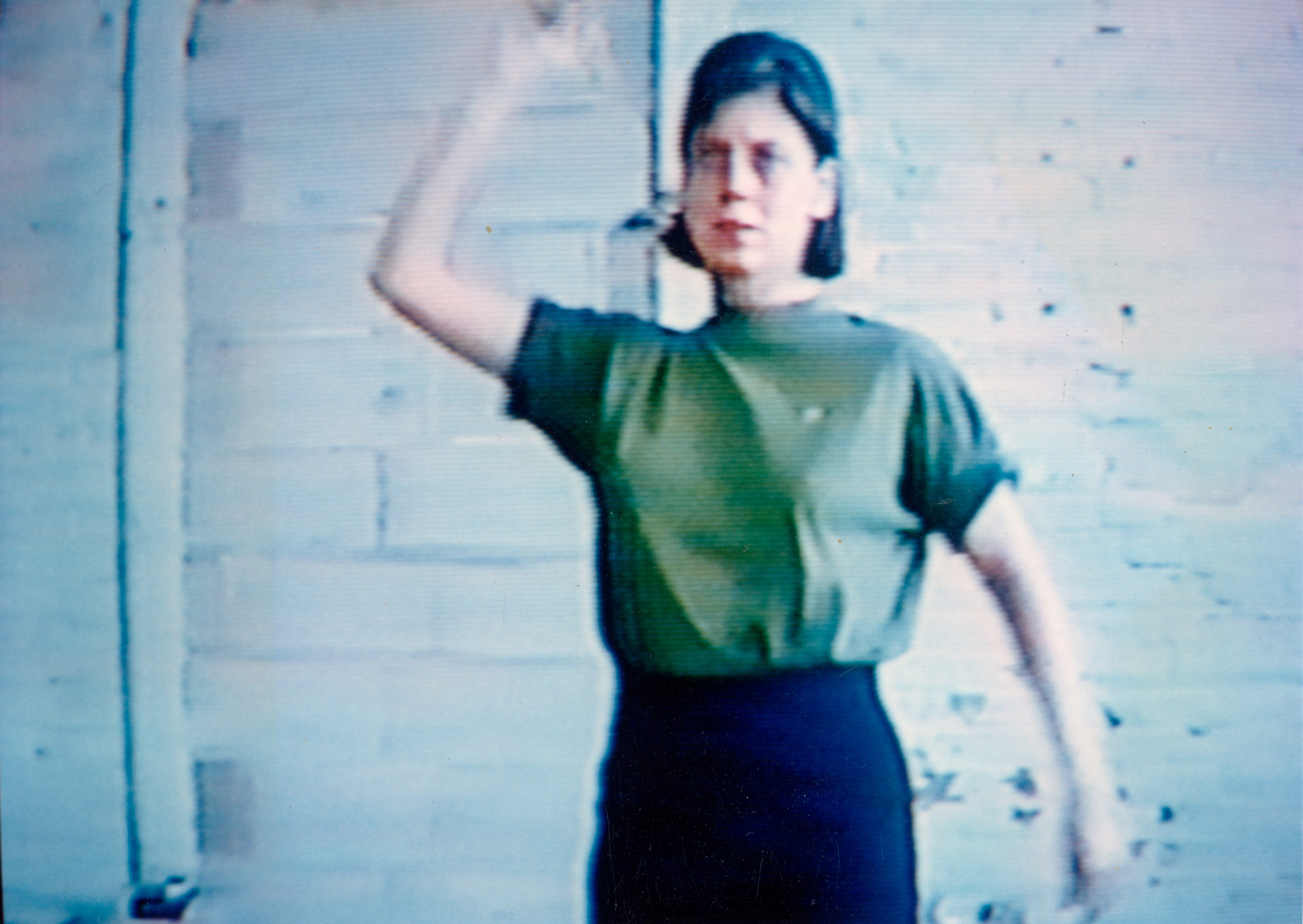
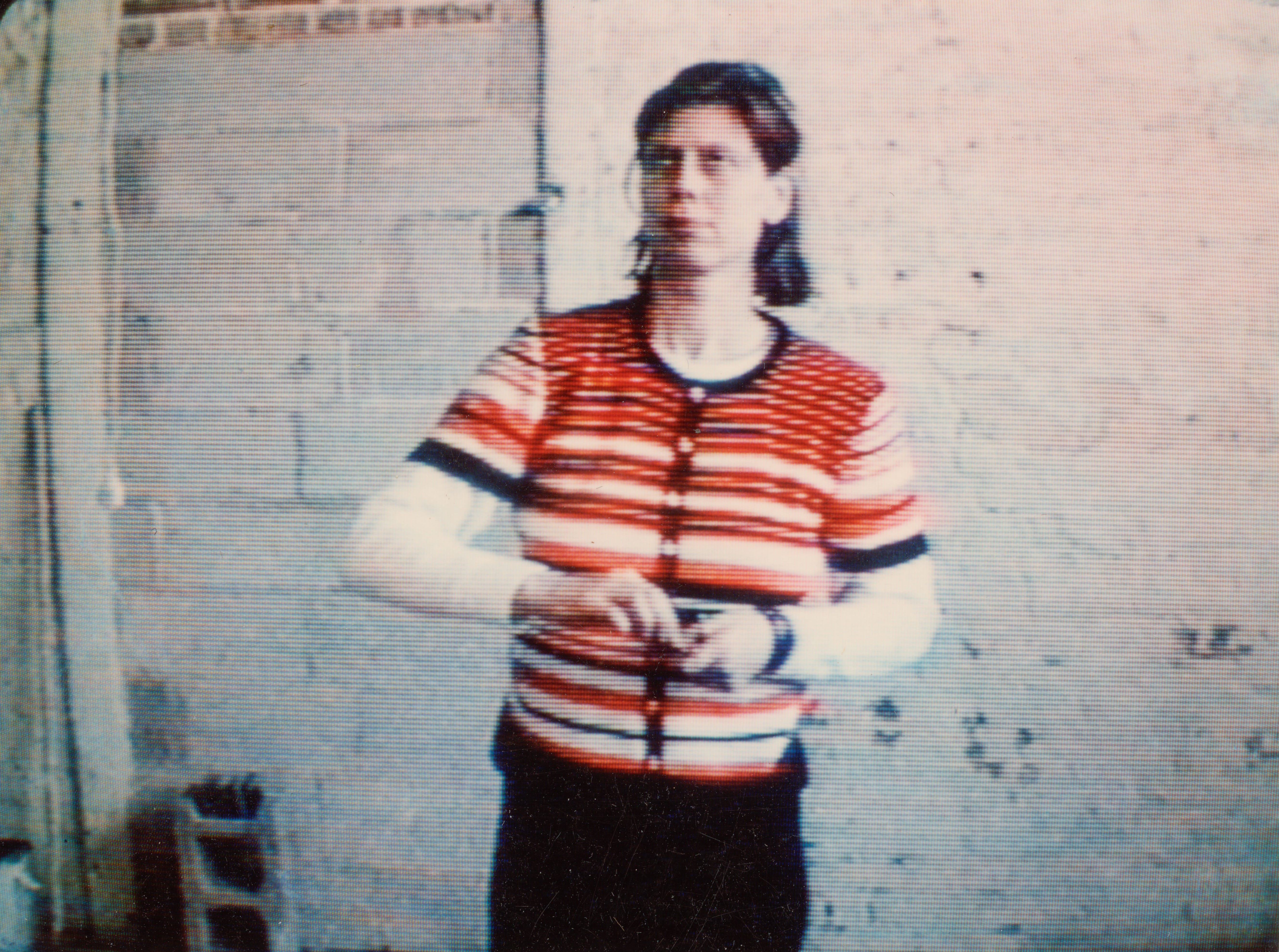
The irony that I started doing performative video art in grad school is not lost on me. My therapist suggested benzos to overcome the performance anxiety, or what I think he thought was “stage fright,” but being on antidepressants was already enough to keep up with, and I declined. When I told a gallery I couldn’t perform in front of a live audience, they built a small room for me to perform in private and rigged a closed-circuit television feed for the audience to watch in real time. The performance was called “Dartboard Maintenance” and received a review, that honestly I’m still proud of, because it tracks a continuum present in my work since the beginning. It was my first review, but the performance was also the first and one of the few accommodations I received, even though I lacked the language to articulate what I was asking for at the time.23
My art school training prepared me well for the “nirvana through monotony John Cage would approve” style video by Mary Hackett. “Dart Board Maintenance” was the first piece that people got up and walked away from. In it, the performer faces the camera, aims, and throws about six darts, retrieves them off camera and does it again...and again, and again, and again. I appreciated the low techness, the historical references and the subtle humor of the piece.
—Review of “Dartboard Maintenance,” F Newsmagazine, 1994
To date, all of my performative work has been filmed with a single camera in the privacy of whatever space I’m using and presented as recorded media through film screenings, monitor installations, or YouTube. (Anonymous Was a Vlog was filmed almost entirely using the Photo Booth app on my MacBook and designed as a YouTube series, though a couple of episodes have screened at festivals.)
Artist Labor, Accommodations Round Two, More Spoons.
To say I’m not great at socializing even after decades of doing so is an understatement. Or maybe I can pass as semi-sociable, but it takes a toll. Unpopular opinion: Anyone who says, "But all artists hate socializing," can leave the chat.
What is socializing anyway? Ah, the second definition, there we go: the action or process of causing a person to behave in a way that is acceptable to their society.
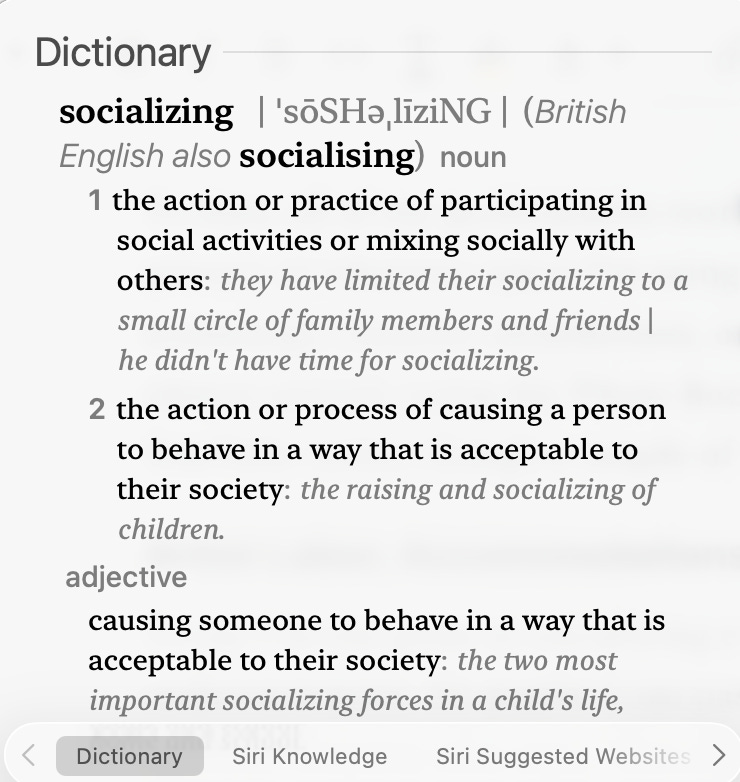
The first definition is the one that usually comes to mind, but the second definition brings home why socializing is often difficult, uncomfortable, or sometimes not possible, for folks in the neurodivergent and disabled community at large. Key word: acceptable.
Socializing—and I’ll throw teaching, or any job that requires dealing with the public, into the mix—is basically asking me to perform, but without CCTV or W.A.G.E-certified compensation4 See what I did there? I invited artist labor and capitalism into the conversation. Only later in life, have I tried asking for accommodations that would enable me to perform better as an educator in the classroom. At my last job, HR politely ignored my request when I identified as someone who would benefit from accommodations by saying, “We treat everyone the same.” Hand to God, they said this with a smile. I’m only half-way surprised they didn’t add bless your heart.
I didn’t push it. I was an adjunct. Tennessee is a right-to-work state. RFK Jr. was trying to establish a national database of Autistic folk. It was a trifecta that felt all too grim. Plus, I’d been down a similar and extremely unpleasant road years before when I was under the assumption I could negotiate pay.5
Questions Round Two, Some Answers.
Within the last week, I’ve been to three art events where I’ve run into people I am friendly with: two openings for the price of one downtown, and a lecture. It’s not that I don’t like people; I find the entire ordeal draining on all accounts— sensory, social, emotional, physical. When I moved from the desert (Joshua Tree) back to Nashville, I had no idea how challenging the transition to city living would be. Or that I would find myself in a part of the country where for various reasons I’m only now discovering, my future might be more uncertain.
Still, I persist.
In my multitudes, I sometimes wonder how I present myself—what’s too much and what’s not enough? This post for instance, might be A LOT. I have deep-seated interests in several things, sometimes all at once, and other times cyclically. My interests and deep dives are not only relevant to my work as an artist—they are the work.
My website looks like I’m a collective, not a single artist, and I am reluctant to distill my work down to a few greatest hits from the past three years, or whatever the expiration date is these days; that doesn’t feel right either. I get that I’m deviating (past-tense: have deviated) further away from the artist-commercial gallery model of my art world goals writ past, but where does that leave me now? Even as little as five years ago, I could have answered that with much more confidence.
How can I separate my interests in the mundane (detritus, dishes) from metaphorical acts of care (tending plants) from tracing landscapes marked once (twice, thrice) by trauma? Or why would I separate the act of painting from making videos or photographs. I’m not a factory worker making widgets, though at times I have taken on that persona as part of the work.
How can the contradiction of growing up in what now feels like the cruelest of red states in the American South, then moving to one of the most unapologetically progressive and just states in the West, only to return to the soil of my upbringing— for reasons that now feel ill-conceived—not inflect the tone of my work?
Why would I separate being a feminist from my sense of social justice? Or, as a late-diagnosed Autistic woman, how can I not feel grief and frustration at not having access to resources early in life? And what am supposed to do with the outrage at our healthcare system, both before and even after the ACA, or how the wheels of capitalism not only go round and round, but are spinning wildly out of control. Have you been calculating the number of spoons each of these questions might consume?
I generally don’t call my work “research-based,” partially because the phrase feels like it’s academic virtue-signaling and partially because as someone who loves fact-finding, my entire life could be classified as research-based. I wasn’t born with a priori knowledge of the climate crisis, but when I receive numerous emergency alerts in the middle of the night urging me to seek shelter, you can bet I’m going to take a deep dive into climate anxiety.6
Documenting the everyday doesn’t require research, but my work is a lived response to the ever-shifting world around me. Of course I contain multitudes. I choose to be informed.
Post-script: This was a long post, and I’m not sure if I resolved anything. Writing, like making art, raises questions for me, not so much of the ontological kind, or the how-can-I-achieve-my- goals-as-an-artist kind, but the practical kind about a future that’s almost always omitted from public discussions in the arts community. It’s a vulnerable topic. Maybe I’ll write more about this later.
Footnotes:
I went to grad school with a guy who, as far as I could tell, never talked to anyone at openings. He simply stood planted in one spot, surrounded by an invisible shield that encircled his three-foot bubble of personal space. He wasn’t standoffish or rude, and again, as far as I could tell, everyone liked him. He was one of my heroes because of this. Imagine going through life without anyone criticizing you for being you, or trying to make you adapt. It’s also possible he was stoned. I don’t know. Meanwhile, I was still using alcohol to manage social situations, supplemented by an intermittent rotation of SSRIs, SNRIs, and atypical antidepressants. Unsuccessfully on all accounts, I might add.
In the 90s, I was able to bring my dog to therapy, and as an assistant editor, I was able to bring my dog to work when I had to work late nights, but this was more about the fact that I worked at a pretty chill post house because ESAs weren’t a thing back then.
I spent an entire semester working on absurd maintenance tasks in my studio, one of which was “maintaining” a dartboard. The images here are from some of the practice sessions, not the live performance.
W.A.G.E. Working Artists and the Greater Economy was founded in New York City in 2008 by a group of visual and performing artists and independent curators. Today, W.A.G.E. is a small but mighty 501(c)3 nonprofit organization that remains focused on one form of inequity that holds in place so many others – the exploitation of labor.
The then-dean was an asshole. I’m not mincing words. I think he was later fired for inappropriate behavior or something. Total dick. The dickest of dicks.
Tennessee is now considered part of the New Tornado Alley. Bonus: Nocturnal tornadoes.
Support Independent Art & Writing
🙏 Nothing is Too Banal is reader-supported. If you’d like to directly support my work, I’ve added a tip jar as an alternative to a monthly subscription.
👉💰🫙Tip Jar
You can also subscribe below👇
Awesome post! You always seem to manage "writing for me," since I go through such similar things. All I can say to that is thank you. Your writing style says it all much better than I could.
Deep appreciation for this post. Thank you.